Runwise Leak Detection
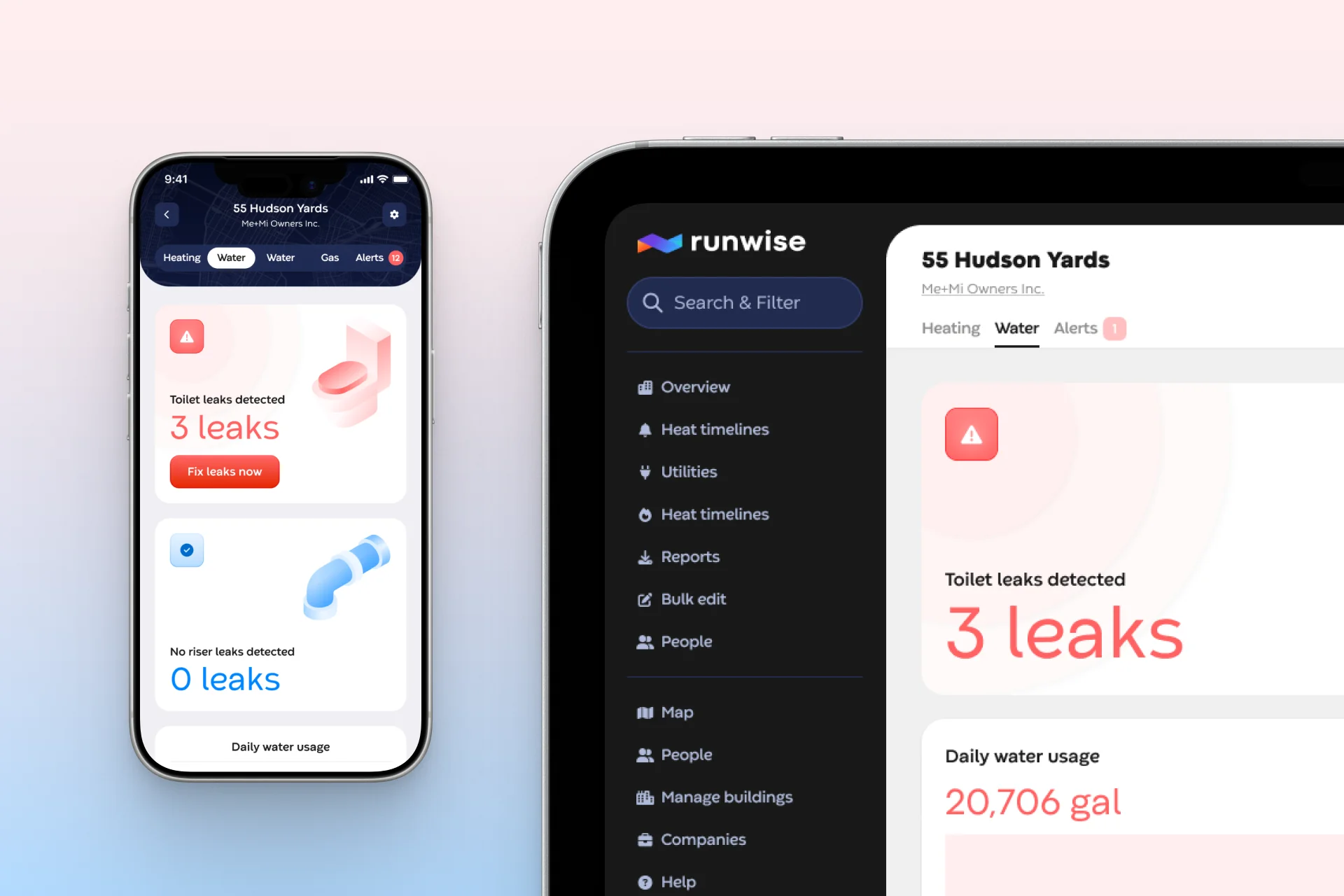
Runwise helps property teams manage 10,000+ buildings smarter. As the platform expanded into water monitoring, I led the design of a new Toilet Leak Detection experience, a zero-to-one feature built to help building operators detect, triage, and manage toilet leaks at scale across hundreds or thousands of units.
Scale breaks the old playbook
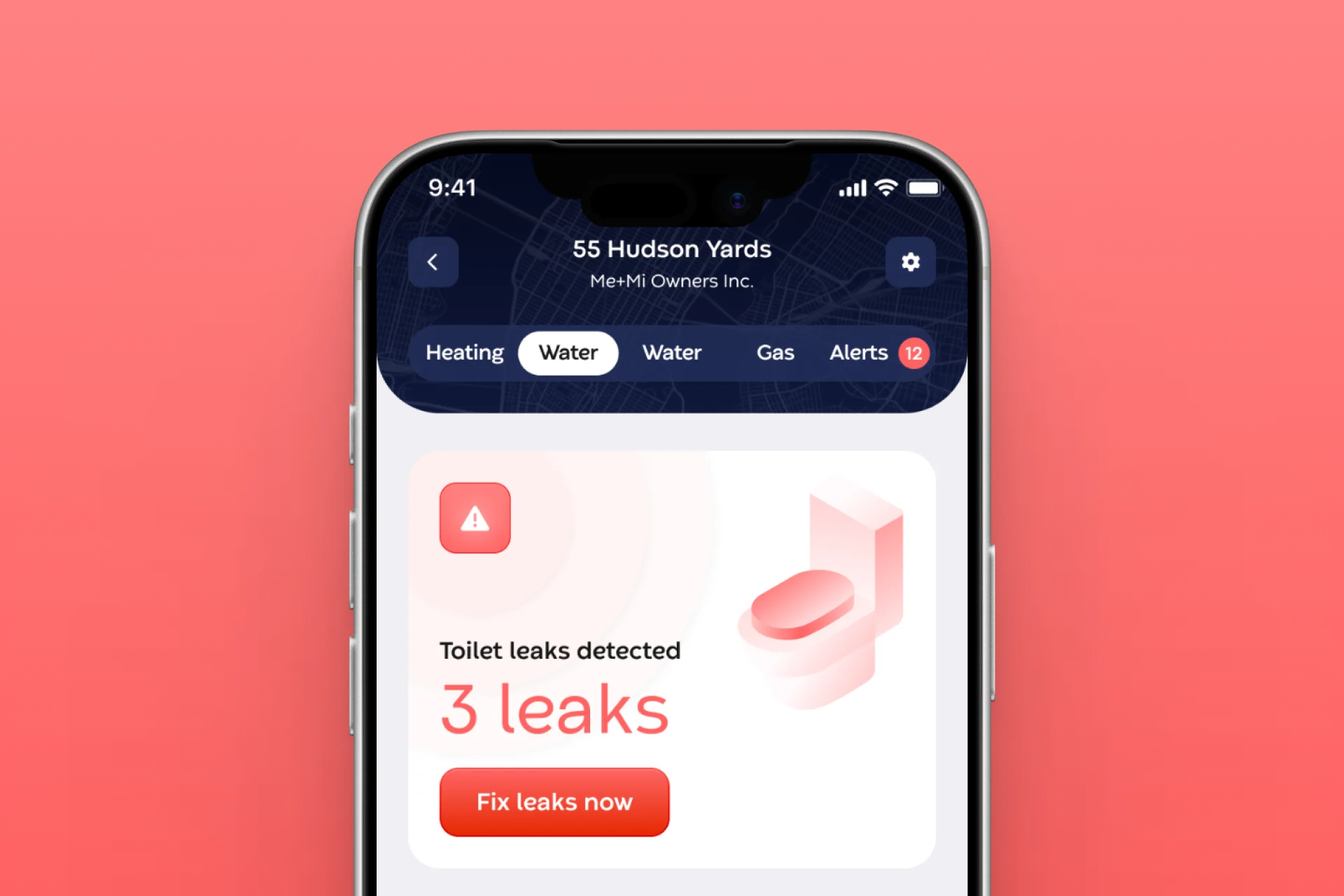
Runwise's existing water monitoring covered riser-level leak detection which is a manageable surface area of 8–12 sensors per building. Toilet monitoring changes the math entirely: a single 36-unit building can require 54+ sensors, and larger properties can exceed 1,600 toilets. The existing UI had no way to handle that volume.
Design for multiple distinct workflows
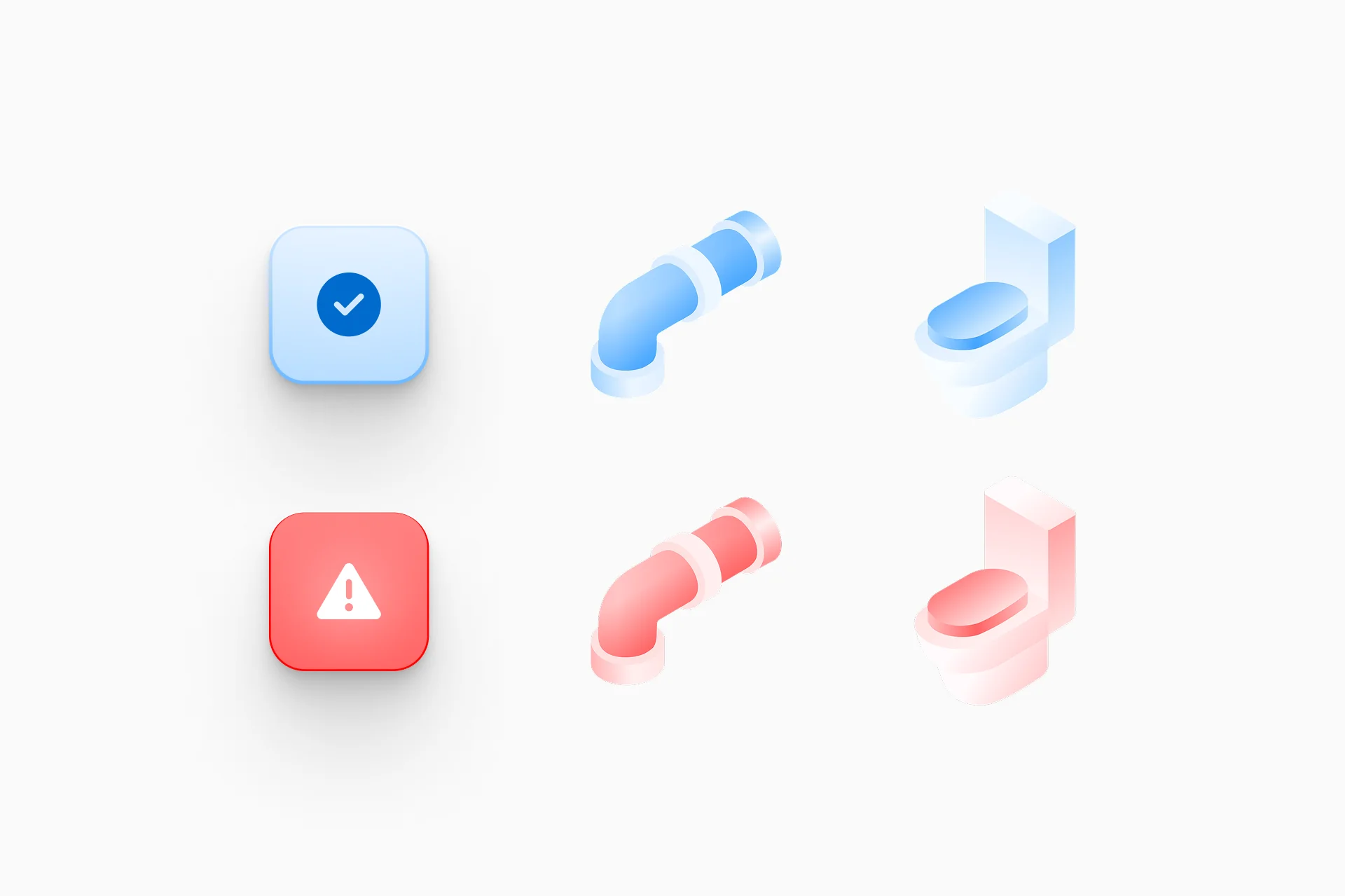
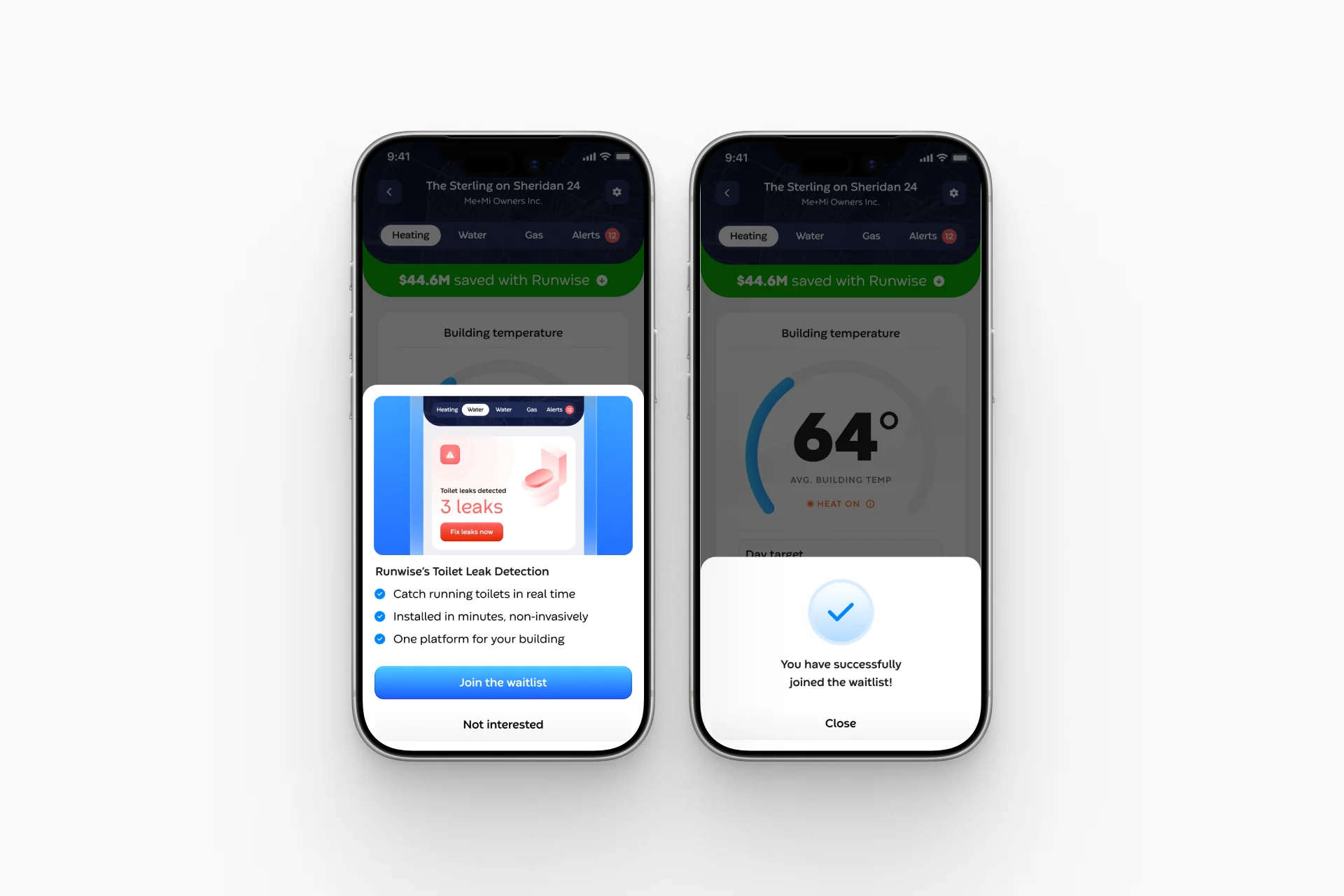
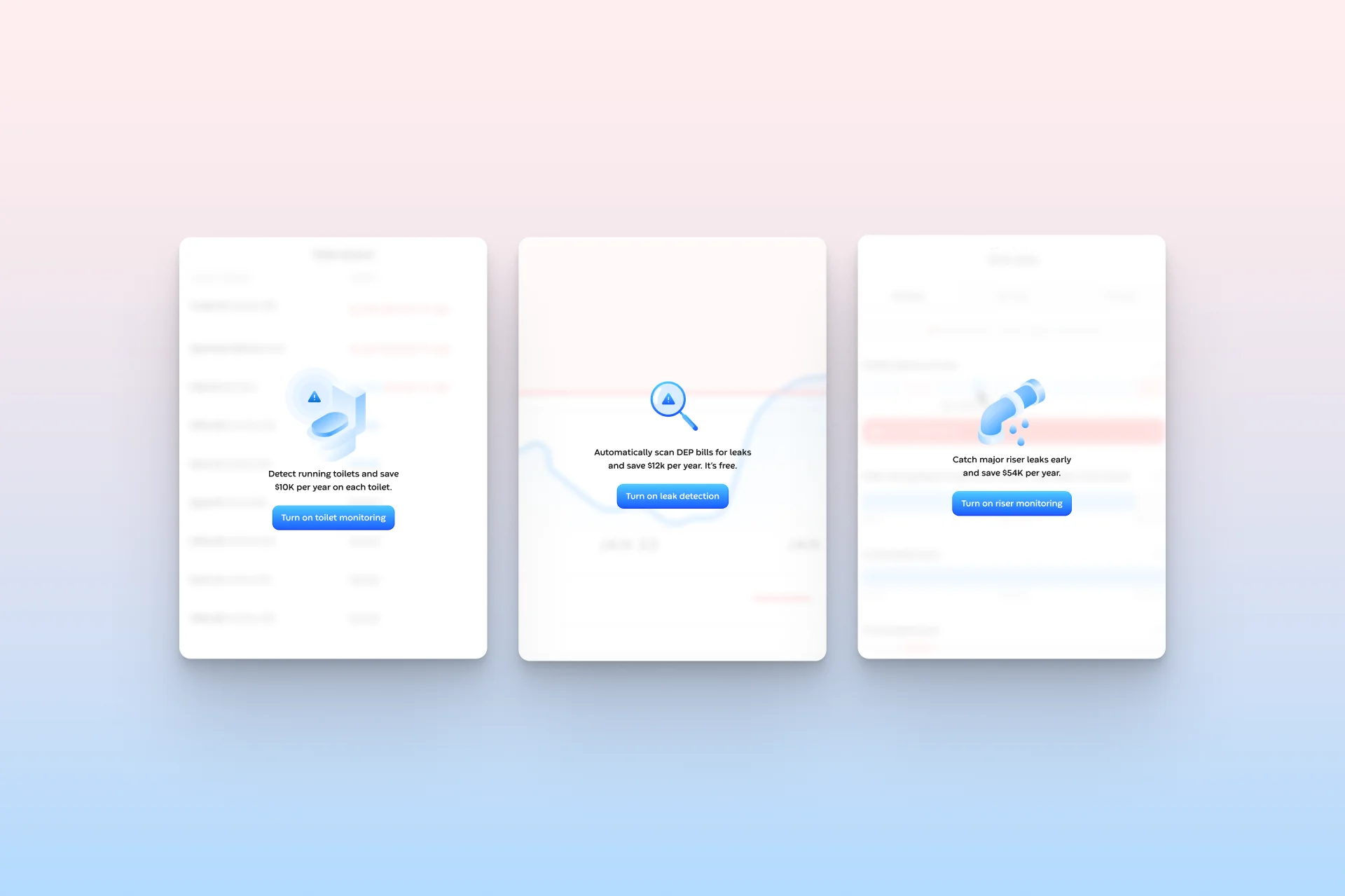
The design strategy centered on progressive disclosure: surface the most critical status information instantly (active leaks, sensor health) through high-visibility callout components, then let users drill into detail as needed. I also had to account for entitlement states, designing “inactive” upsell experiences for buildings not yet subscribed to Toilet Leak Monitoring, so the feature could double as a conversion surface without feeling interruptive.
A unified water tab built for scale and triage
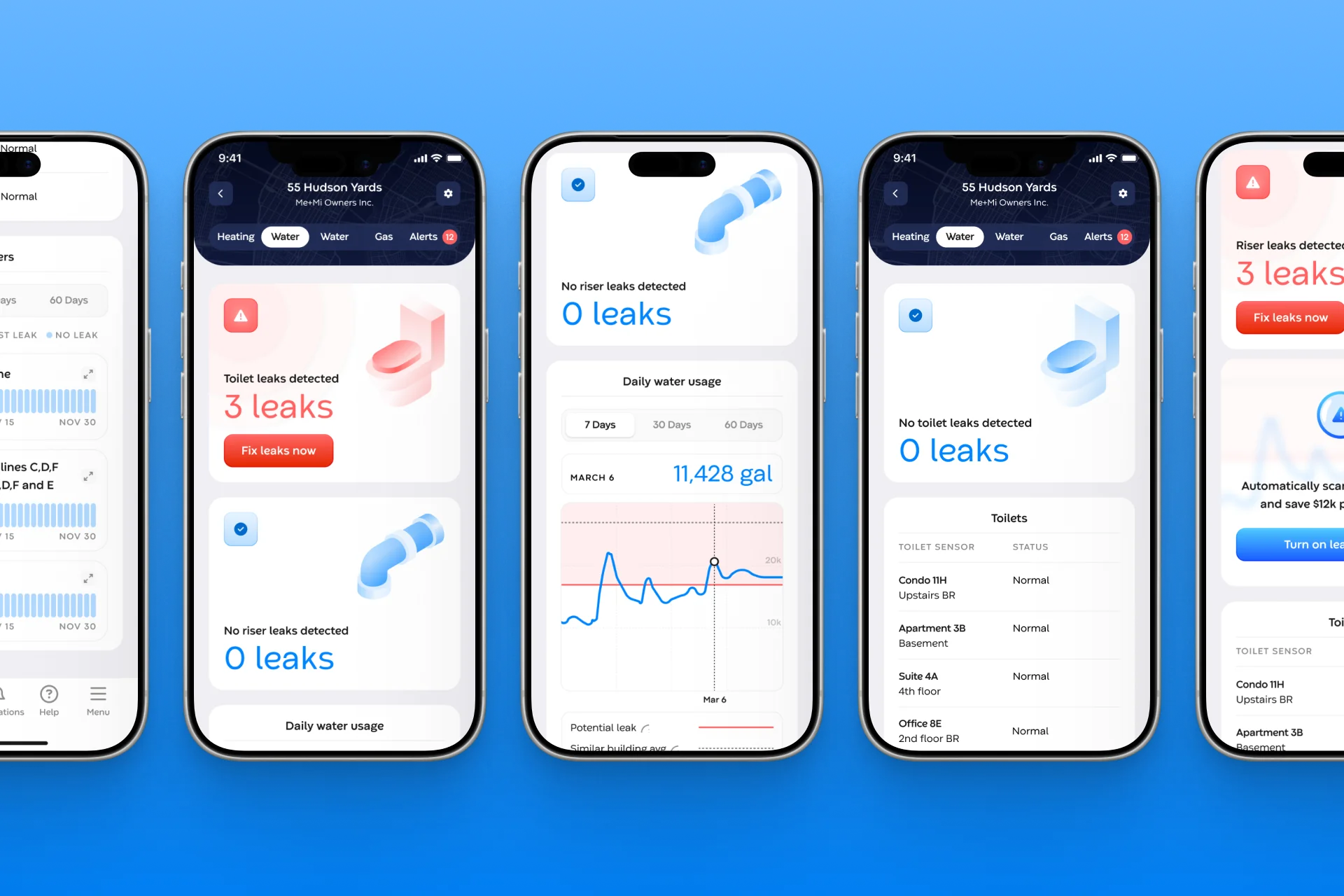
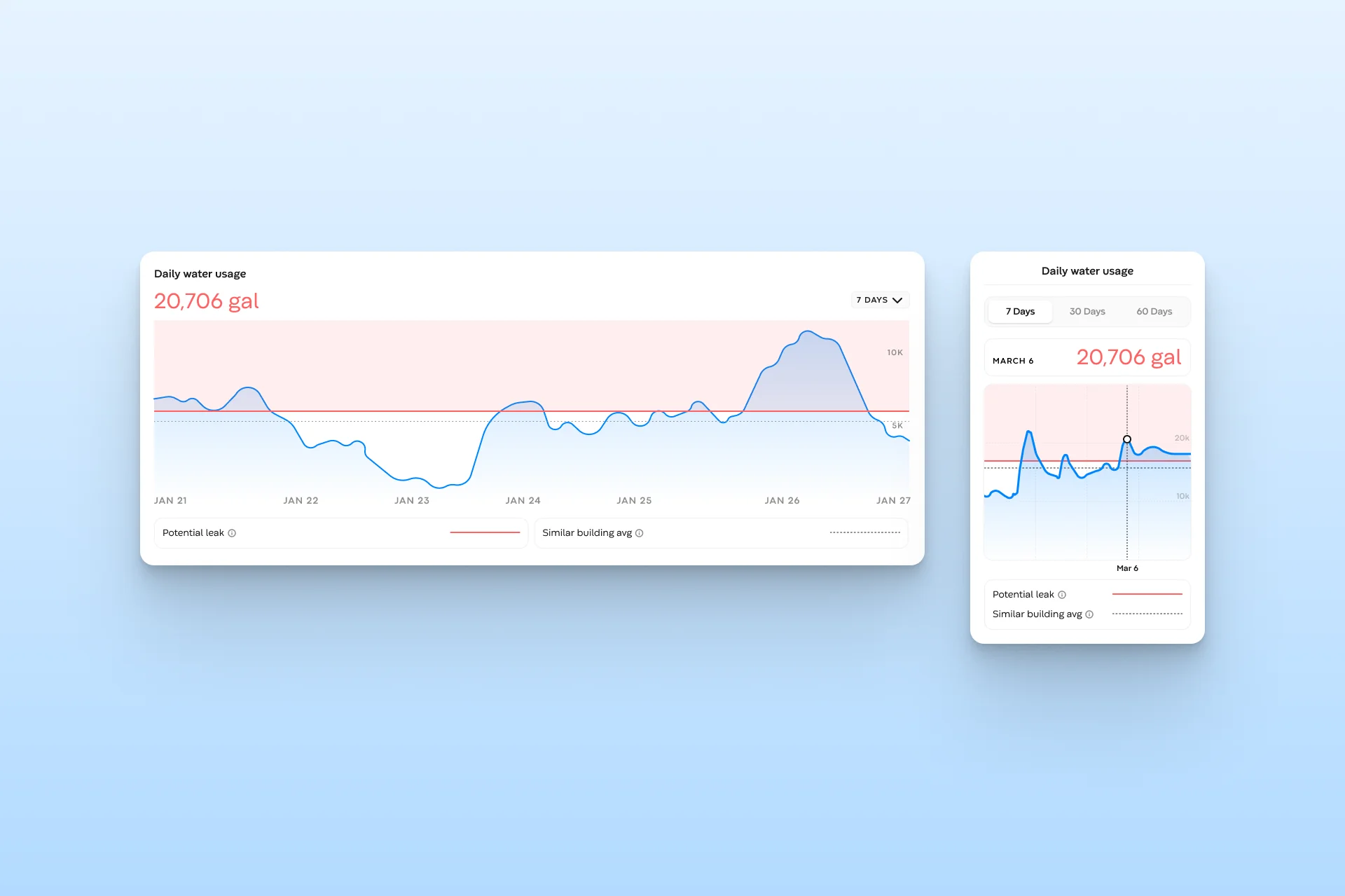
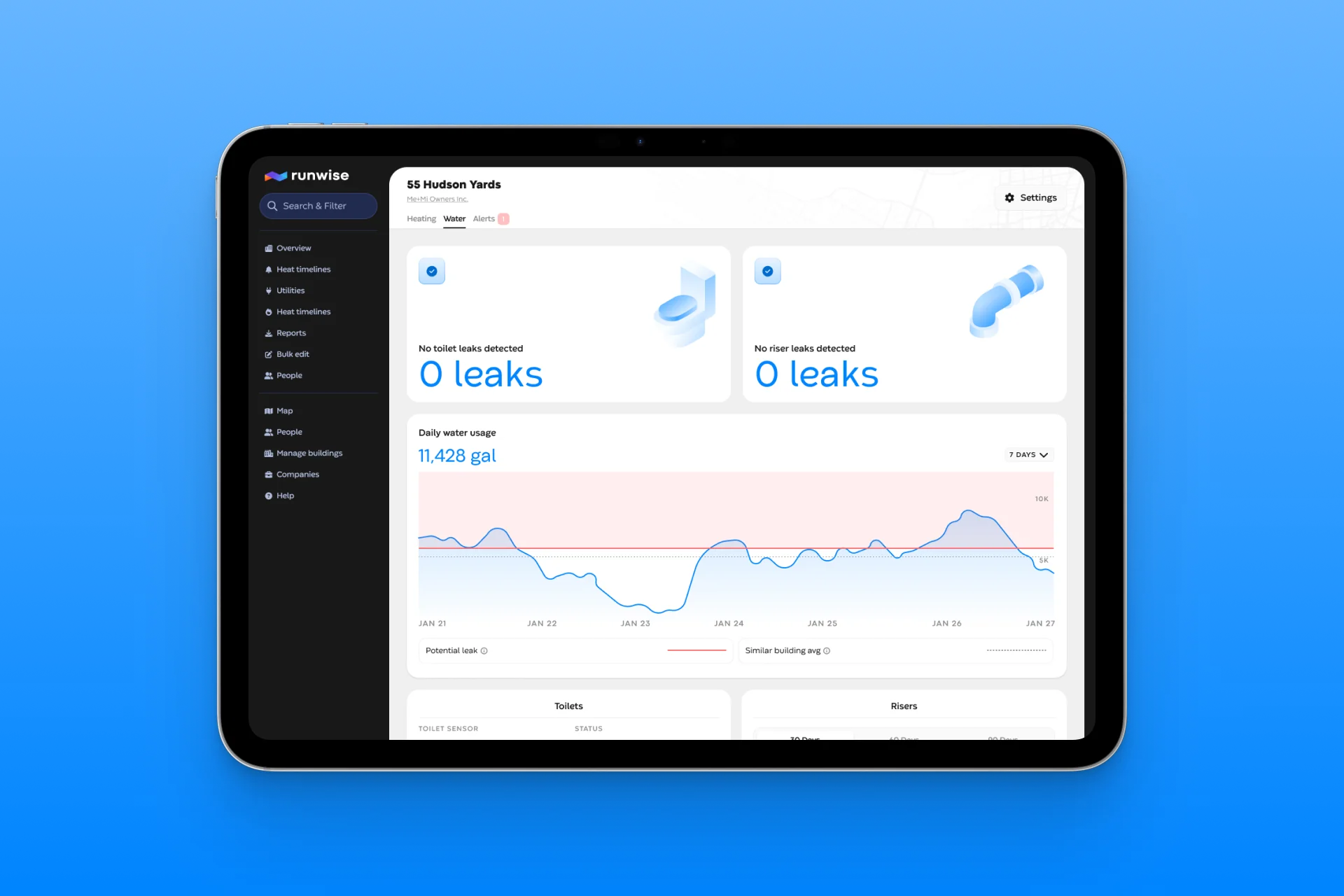
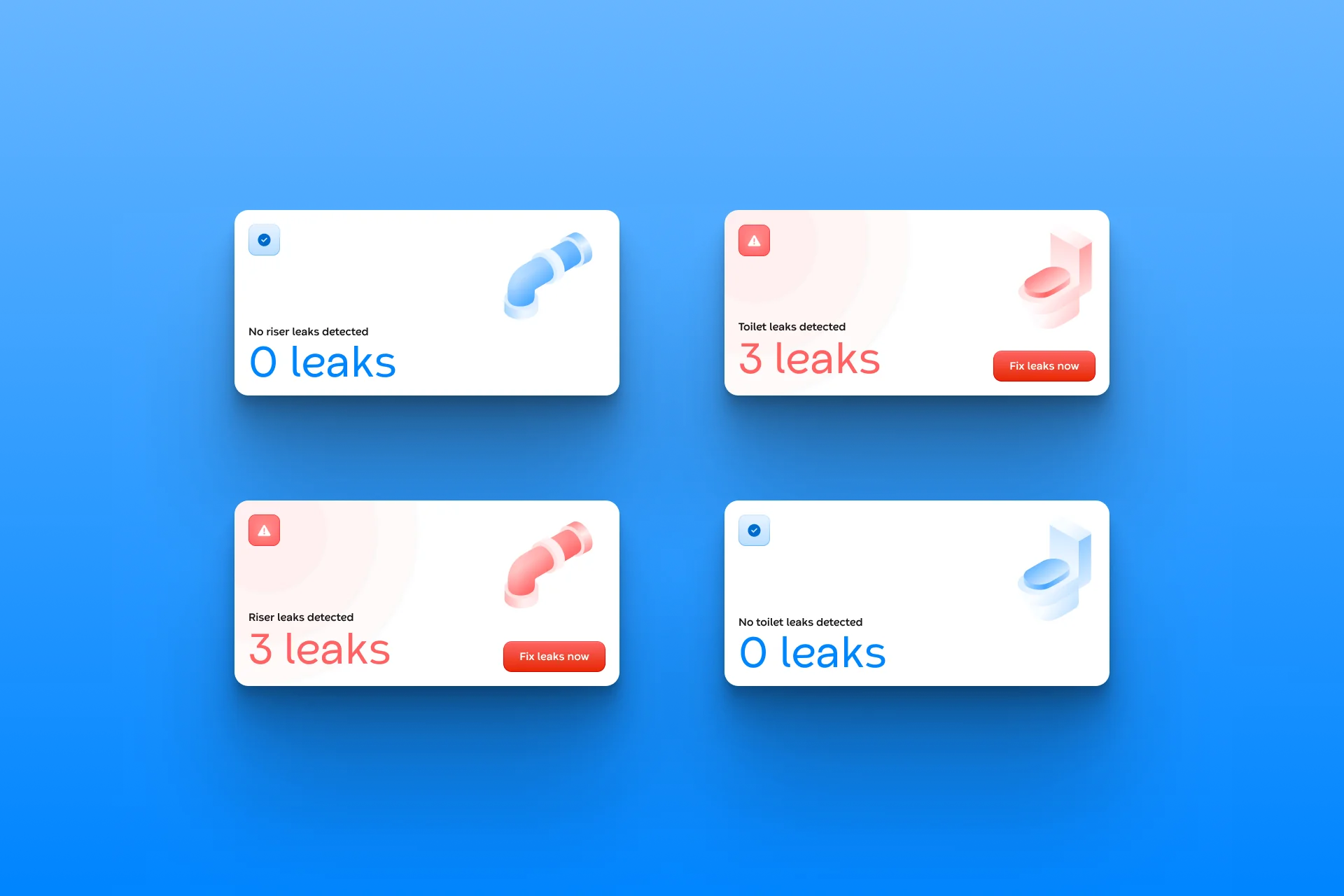
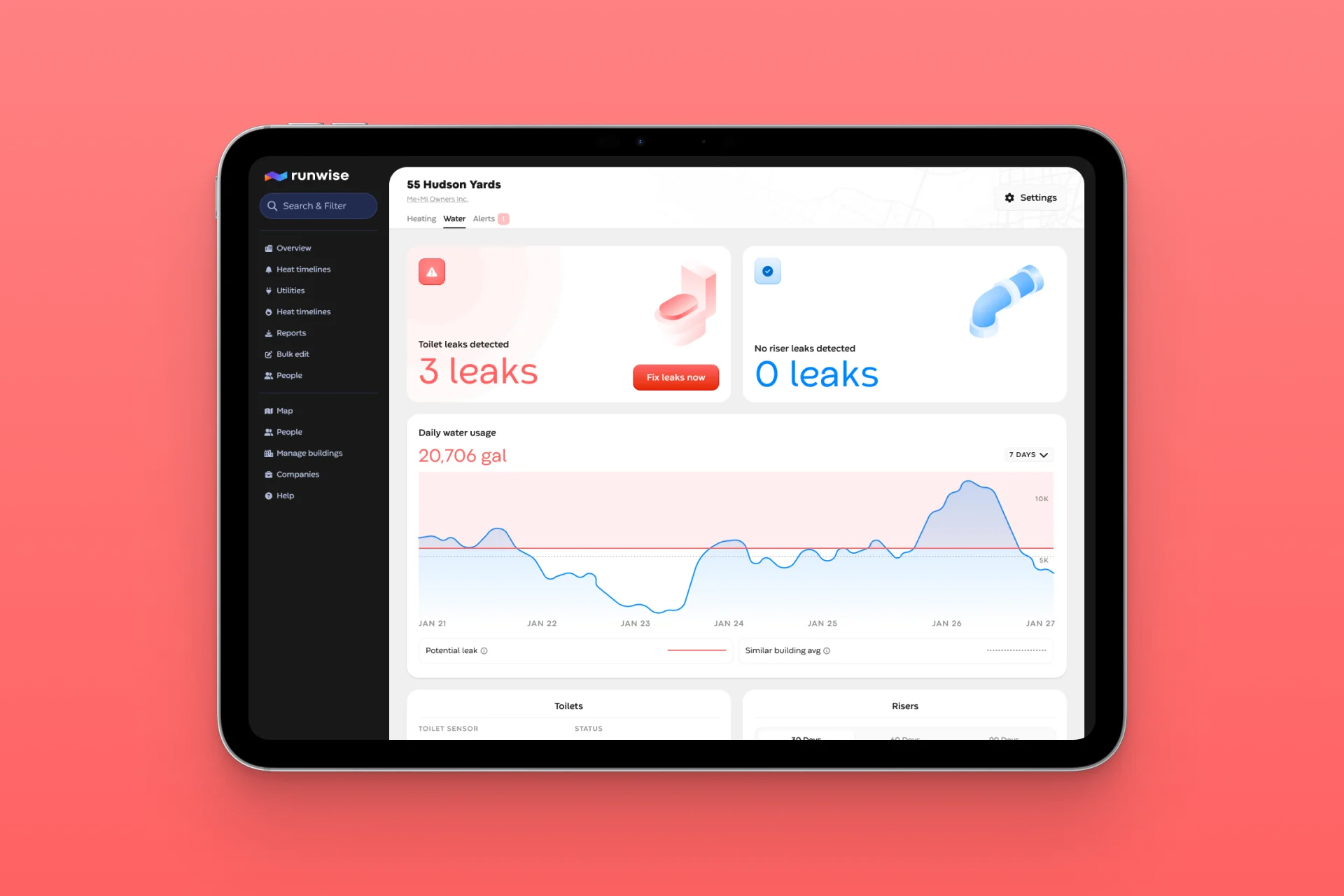
I redesigned the Water tab to consolidate toilet leak detection, riser monitoring, and DEP water usage data into a single, scannable surface. Prominent callout components give operators an at-a-glance count of active toilet and riser leaks in under 5 seconds with clear empty states when there's nothing to act on.
From alert noise to confident decision-making
The redesigned Water tab gives building operators everything they need to determine whether a toilet leak is real (and act on it) in minutes rather than hours. The unified view reduces context switching, the callout system eliminates the need to hunt for active issues, and the sensor status table makes mass deployment management tractable for the first time.